 You are currently shopping on Aesthetics Depot Canada


An Essential Public Health Inspection Guide for Medical Aestheticians in Canada
Running a medical aesthetics clinic involves more than providing quality treatments. Keeping your equipment clean, maintaining proper records, and following infection prevention practices are equally important.
Public health inspections help ensure that medical spas, aesthetic clinics, and beauty salons maintain safe environments for clients and staff. Yet, some of the details that inspectors review can easily be overlooked during a busy workday.
From removable laser tips and microneedling cartridges to disinfectant records and sharps disposal, small details can make a difference.
These are seven areas every medical aesthetic professional should review before their next public health inspection.
1. Laser Equipment: Do You Know How to Disinfect Your Treatment Tips?
Laser equipment is used daily in many aesthetic practices. However, cleaning the device’s exterior is only one part of proper equipment care.
Public health inspectors may ask whether your laser handpiece has a removable tip and how it is cleaned and disinfected between clients.
If your device has detachable components, staff should understand how to remove, clean, disinfect, and safely reattach them according to the manufacturer’s instructions.
What should your clinic check?
- Whether the laser tip is removable.
- The manufacturer’s cleaning and disinfection instructions.
- Whether the disinfectant is appropriate for the equipment.
- How staff clean and disinfect reusable components between clients.
- Whether protective covers or disposable accessories need replacement.f
2. Tool Disinfection: Is Your Cleaning Process Suitable for Every Instrument?
Facial brushes, treatment bowls, tweezers, and other reusable instruments come into contact with clients throughout the day.
These tools require appropriate cleaning and disinfection before being used again.
Some clinics use 70% alcohol for suitable instruments. Others may require higher-level disinfectants or sterilization, depending on the instrument and how it is used.
One important point: 70% alcohol is not suitable for every reusable tool or procedure.
Before disinfecting, reusable tools should be cleaned to remove visible dirt and debris. Where immersion is required, clinics should have a suitable container that allows instruments to be fully submerged for the recommended contact time.
The correct disinfection method depends on the instrument’s intended use, the manufacturer’s instructions, and applicable public health requirements.
Clinic owners should make sure their staff understand this difference rather than relying on one cleaning product for everything.
3. Disinfectants and Cleaning Supplies: Are Your Records Up to Date?
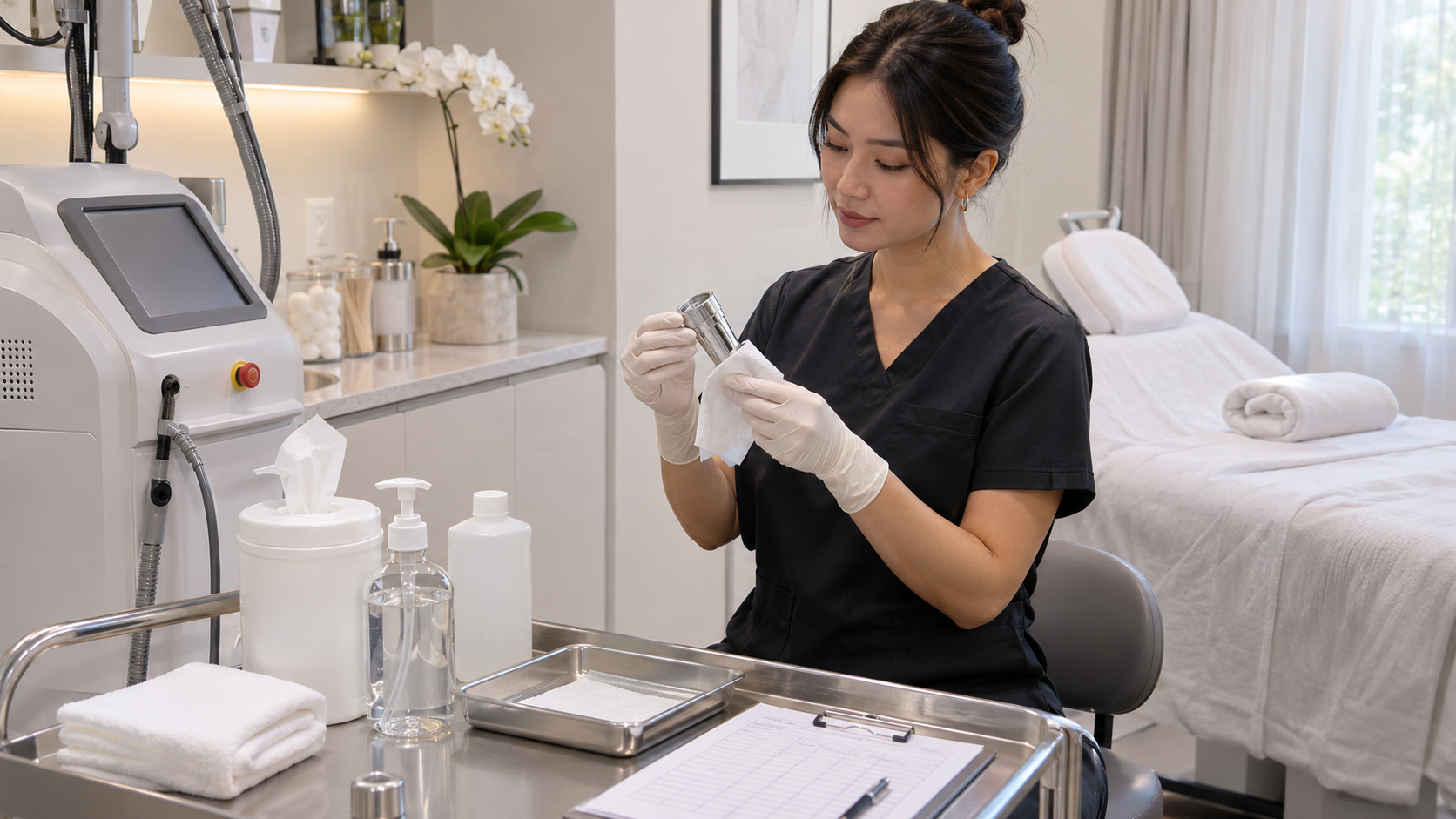
Having disinfecting wipes and cleaning solutions available is important. Knowing exactly what is being used is just as essential.
Inspectors may review disinfectant labels, expiry dates, product identification, and records showing how disinfecting solutions are prepared and used.
Clinics should maintain an organized record of their cleaning products, including:
- Product name and manufacturer.
- Lot or batch number, where applicable.
- Expiry date.
- Drug Identification Number (DIN) or other applicable Health Canada authorization.
- Product concentration and preparation date, when required.
- Replacement or disposal date for prepared solutions, when applicable.
Serial numbers may be relevant to equipment, while consumables are commonly identified through lot or batch numbers.
A practical tip for clinics: Keep a simple disinfectant inventory log and review it regularly. Remove expired products and make sure staff can locate the manufacturer’s instructions when needed.
4. Microneedling: Are Your Cartridges Sterile and Your Devices Properly Protected?
Microneedling deserves particular attention because the procedure involves controlled penetration of the skin.
Using sterile, single-use needles and preventing contamination of reusable equipment are essential parts of safe treatment practices.
Public health guidance identifies several important precautions for microneedling services.
Before your next inspection, review the following:
- Individually packaged, sterile microneedling needles or cartridges.
- Visible lot numbers and expiry dates on sterile supplies.
- Disposable protective sleeves or barriers where required.
- Appropriate cleaning and disinfection of reusable microneedling pens.
- Immediate disposal of used cartridges into approved sharps containers.
- Verification of applicable Health Canada device licensing requirements.
A disposable sleeve does not replace proper equipment cleaning. Similarly, using a new needle cartridge does not automatically mean the reusable pen is free from contamination.
Clinics should also confirm that needle cartridges and equipment are compatible and intended for their specific procedures.
Sterile packaging, traceable lot numbers, clear expiry dates, and device documentation are important considerations when supplying microneedling equipment and consumables.
5. Sharps Disposal: When Should You Replace Your Container?
Used needles, lancets, and microneedling cartridges must be handled carefully.
Improper sharps disposal can expose staff and clients to avoidable injuries and potential infection risks.
Every treatment area where sharps are used should have an appropriate, puncture-resistant sharps container located close to the point of use.
Some clinics choose to replace their containers when they become half full as an extra precaution.
Staff should never force additional sharps into a full container or attempt to retrieve discarded needles.
Make checking sharps containers part of your regular treatment-room inspection rather than leaving replacement until the container is nearly full.
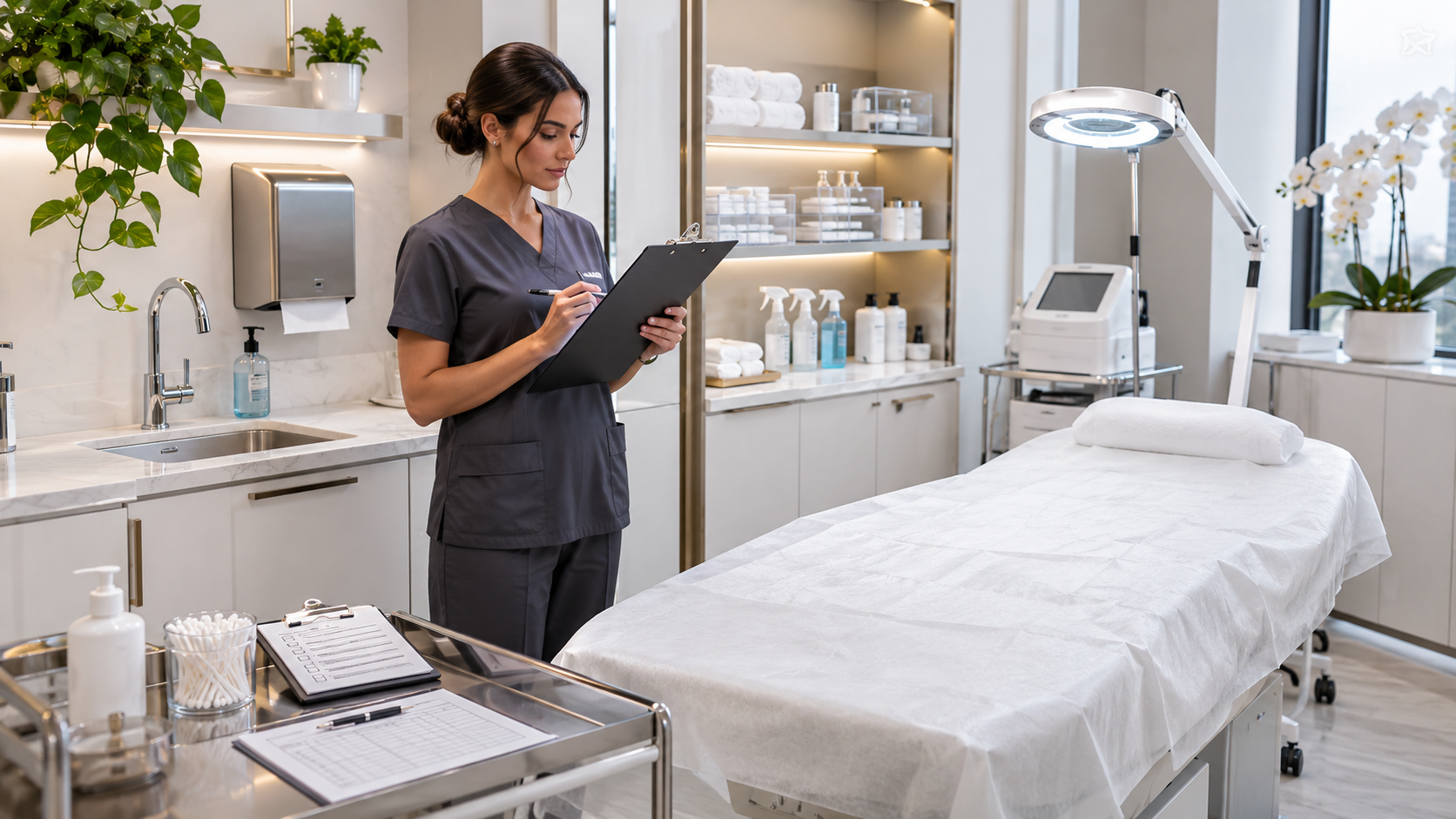
6. Treatment Rooms: Are Your Furniture and Hygiene Stations Inspection-Ready?
A beautiful treatment room is not necessarily a hygienic one.
Soft furnishings, difficult-to-clean surfaces, and improperly maintained treatment beds can create problems during public health inspections.
Treatment rooms should contain furniture and surfaces that are smooth, non-absorbent, and easy to clean and disinfect.
Fabric-covered furniture can be difficult to disinfect adequately, making wipeable treatment chairs and beds a more practical choice for clinical environments.
Pay particular attention to these areas:
- Treatment beds should have surfaces compatible with appropriate disinfectants.
- CaviWipes or other disinfecting wipes should be used according to their labels and the equipment manufacturer’s instructions.
- Disposable bed covers should be changed between clients.
- The treatment bed itself still requires routine cleaning and disinfection.
- Soap, accessible handwashing facilities, hot and cold running water, and suitable hand-drying supplies must be available as required.
Some clinics prefer to have handwashing facilities in every treatment room. However, specific sink requirements depend on the facility and applicable regulations.
Another detail inspectors may ask about is your cleaning schedule.
Clinic staff should be able to explain when treatment beds, work surfaces, and reusable equipment are cleaned, which products are used, and how cleaning is documented.
Having a written cleaning schedule can make these procedures easier to follow across the entire team.
7. Medical Director Information: Is Your Documentation Organized?
Medical aesthetics clinics that operate under medical oversight should keep their Medical Director’s information organized and readily accessible.
This is particularly relevant for practices offering procedures that require involvement from regulated healthcare professionals.
Depending on the services provided and the clinic’s regulatory obligations, relevant documentation may include:
- Medical Director’s full name.
- Professional designation and licence information.
- Contact details and mailing address.
- Scope of responsibilities within the clinic.
- Relevant clinical protocols and oversight arrangements.
A Medical Director is not a universal requirement for every beauty salon or personal service setting. Clinics should confirm the professional oversight requirements that apply to their procedures.
Keeping this information current helps staff understand their responsibilities and supports organized clinic operations.
Make Inspection Readiness Part of Your Everyday Routine
Preparing for a public health inspection should not begin when an inspector arrives at your clinic.
A short internal review can help identify missing documentation, expired products, incorrectly stored instruments, or equipment that needs attention.
Walk through each treatment room. Check your cleaning supplies. Review sterile packaging and sharps containers. Ask your staff to explain how they disinfect the equipment they use.
Most importantly, make sure your clinic’s procedures match the services being provided and the requirements of your local public health authority.
Stay tuned with Aesthetics Depot for further informatiob like this!
A well-prepared clinic is not simply ready for an inspection. It is ready to provide safer, more consistent care every day.